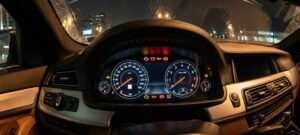
Your heart sinks. Dollar signs start flashing before your eyes. Is my car about to explode? Can I keep driving? How much is this going to cost?
The Check Engine Light (CEL) is the most misunderstood warning system in your vehicle. For many drivers, it’s a source of anxiety. For others, it’s a glowing orange suggestion that they ignore for months (or until inspection time).
In this post, the diagnostic experts at MGI Auto break down exactly what this light means, the difference between a minor glitch and a major failure, and why “reading the code” at an auto parts store is rarely enough to fix the problem.
What Does the Light Actually Mean?
First, let’s demystify the system. Your car is controlled by a network of computers, the main one being the Engine Control Unit (ECU). This computer constantly monitors readings from dozens of sensors—oxygen levels in the exhaust, engine temperature, air intake volume, and more.
When the ECU detects a signal that falls outside the “normal” range, it triggers a Diagnostic Trouble Code (DTC) and turns on the Check Engine Light to alert you.
It does not necessarily mean your engine is broken. It simply means the computer has detected something that affects the vehicle’s emissions or running efficiency.
The Golden Rule: Flashing vs. Solid
Before you panic, look closely at the light. Is it steady, or is it blinking?
1. The Solid Light (Amber/Orange)
If the light is on and staying on, don’t panic. This indicates a non-critical issue. Your car is still drivable. However, the vehicle is likely running in a “safety” mode or burning more fuel than necessary. You should book an appointment to get it checked within the next few days, but you don’t need to pull over immediately.
2. The Flashing Light
If the light is blinking on and off, pull over immediately and safely. A flashing Check Engine Light indicates an active misfire. This means fuel is being dumped into the engine cylinders but not igniting. This raw fuel gets pushed into your exhaust system where it can overheat and destroy your catalytic converter—a repair that costs thousands of dollars—in a matter of minutes. Do not drive a car with a flashing engine light. Call a tow truck.
The Top 5 Common Culprits
While there are thousands of potential codes, roughly 80% of Check Engine Lights in Calgary are caused by these five components:
1. A Loose or Faulty Gas Cap
Believe it or not, this is one of the most common causes. The fuel system is sealed / pressurized. If your gas cap is loose, cracked, or the rubber seal is worn, fuel vapors escape. The computer detects a “leak” in the EVAP system and turns on the light.
- The Fix: Tighten your cap until it clicks. If the light stays on after a few days of driving, you might need a new cap (a cheap $20 fix).
2. Oxygen (O2) Sensor Failure
Your car has sensors in the exhaust that measure how much unburned oxygen is leaving the engine. This tells the computer if the fuel mix is too rich (too much gas) or too lean (too much air). O2 sensors live in a harsh environment of extreme heat and eventually burn out.
- The Risk: A bad O2 sensor ruins your fuel economy (by up to 40%) and can damage your catalytic converter over time.
3. Catalytic Converter Failure
This is the one nobody wants. The catalytic converter turns harmful exhaust gases into harmless ones. It usually fails because another problem (like a bad spark plug or O2 sensor) was ignored for too long.
- The Reality: This is an expensive part containing precious metals. Regular maintenance is the best way to protect it.
4. Mass Air Flow (MAF) Sensor
The MAF sensor measures the amount of air entering the engine so the computer can inject the right amount of fuel. In Calgary, our dusty roads and dry air can clog the air filter. If the filter is dirty, dust hits the MAF sensor, causing it to read incorrectly.
- The Fix: Sometimes, a simple cleaning of the sensor and a new air filter is all it takes.
5. Worn Spark Plugs or Ignition Coils
To ignite the fuel, your engine needs a spark. Worn plugs or failing ignition coils cause the spark to be weak, leading to a misfire (the engine feels like it’s “stumbling” or shaking).
- The Interval: Spark plugs are maintenance items. If you haven’t changed them in 100,000 km, they are likely the culprit.
The “Free Scan” Myth: Why Codes Are Not Diagnoses
This is the most common frustration we see at MGI Auto. A customer comes in and says: “I went to the auto parts store, they scanned it for free, and told me I need a new O2 sensor. I changed it, but the light is still on.”
Here is the truth: A code reader does not tell you what part to replace. It only tells you what system is unhappy.
Example: Code P0171 (System Too Lean) This code means the engine has too much air and not enough fuel.
- The Amateur Guess: Change the O2 sensor (because it reported the error).
- The Professional Diagnosis: The O2 sensor is actually working perfectly—it’s correctly reporting a problem! The real issue might be a vacuum leak, a clogged fuel injector, a weak fuel pump, or a dirty MAF sensor.
Replacing the sensor is like killing the messenger. At MGI Auto, we don’t just read the code. We use live data streams, smoke machines (to find vacuum leaks), and lab scopes to test the actual components. This is what we call Evidence-Based Repair. We prove the failure before we sell you a part.
What Should I Do If the Light Comes On?
- Check your dashboard gauges. Is the car overheating? Is oil pressure low? If other red lights are on, stop immediately.
- Tighten your gas cap. Give it a few clicks.
- Listen and Feel. Is the car running roughly? Is there a strange noise?
- Book a Professional Diagnostic Scan.
Conclusion
A Check Engine Light isn’t there to annoy you; it’s there to protect your investment. Ignoring it usually turns a small repair (like a sensor) into a massive one (like a catalytic converter).
At MGI Auto, we specialize in advanced diagnostics. We don’t guess, and we don’t use the “parts cannon” approach. If your light is on, bring it to us for a definitive answer and a clear path to getting that orange light off your dashboard for good.